There is a particular quality of confidence that only old illustrations possess. The kind where every element — the subject, the border, the negative space — feels deliberately placed, as if someone spent weeks engraving it into copper. SREF 764 generates that quality on demand.
It does not simply add a vintage filter. It restructures the image around a decorative logic: the subject is placed within an ornamental system — arched frames, botanical borders, cartographic motifs — and the result reads like a plate from a Victorian encyclopedia rather than an AI-generated image.
Where SREF 3230 expands space into architecture, SREF 764 contracts it into a frame. The world becomes a cabinet. The subject becomes a specimen.
This is a precise, intentional aesthetic with a clear grammar. Learn to speak it, and you gain access to one of the most recognisable visual registers in print history.
Visual Identity
The Four Signatures of SREF 764
Consistent markers that appear regardless of prompt subject or category.
01
The Ornamental Frame
Every composition gains a decorative border or arched enclosure — like a page from an illuminated manuscript.
02
Flat Vintage Print
Replaces 3D rendering and photography with the flat, layered quality of a Victorian illustrated plate.
03
Teal + Earth Palette
Deep turquoise paired with ochre, rust, and warm browns — the unmistakable colour grammar of aged print.
04
Cartographic Motifs
Maps, compasses, botanical engravings, and explorer artefacts infiltrate every scene — invited or not.
Prompt 1 · Explorer Portrait
The Subject That Became a Map
A portrait prompt — a cartographer in his study. Without the code, Midjourney produces a rendered character illustration. With it, the subject is absorbed into the decorative system.
a cartographer in his study, surrounded by maps and instruments, globe, warm light — tested without / with --sref 764 --ar 3:4

Without --sref 764
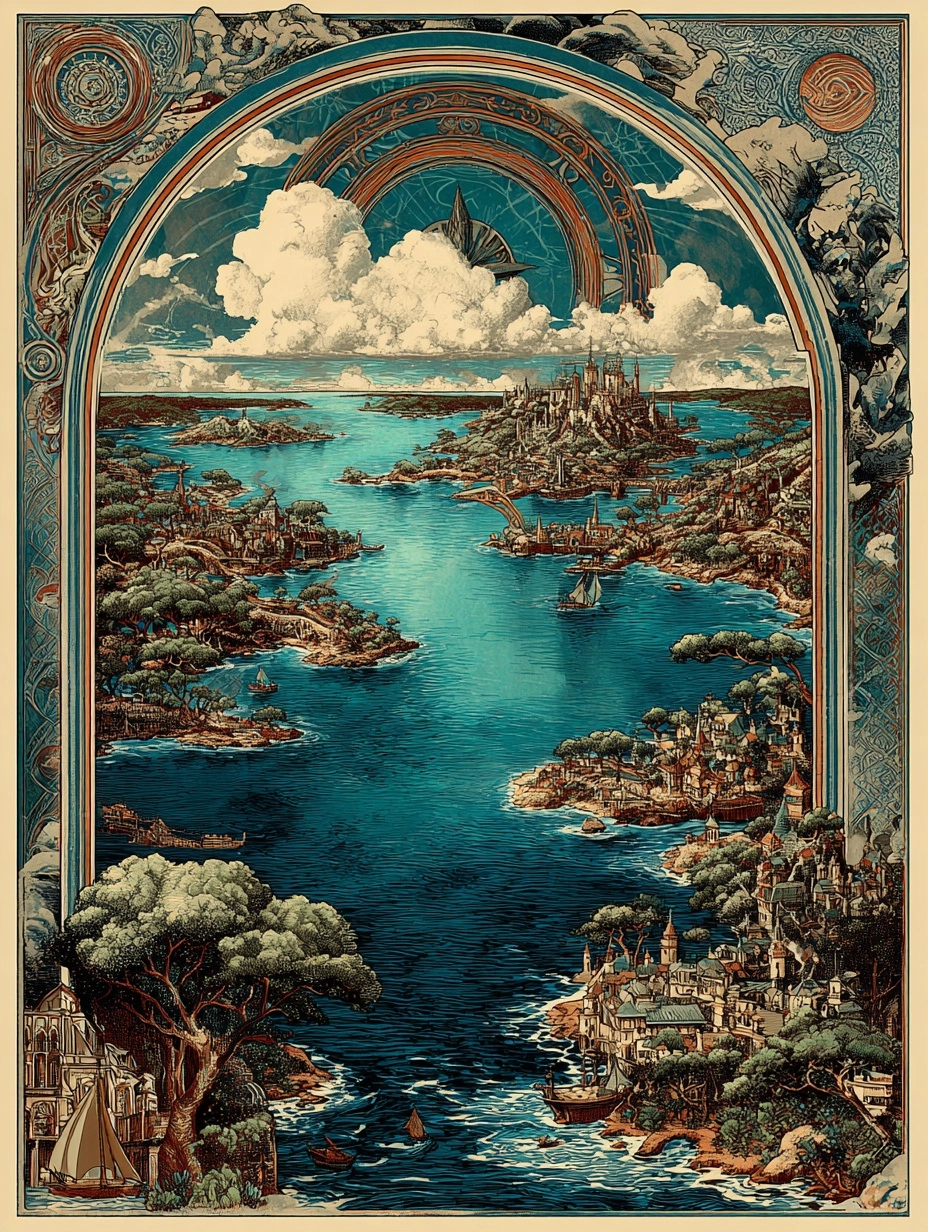
--sref 764 applied

--sref 764 applied
What changed: The portrait subject disappeared. SREF 764 took the concept of "cartographer and globe" and translated it not into a person, but into a cartographic object — an ornate world map and an illustrated landscape framed within an arched border. The human was replaced by the tools of exploration, rendered in the style of a Victorian atlas plate. The prompt's content became the theme of the decorative system, not its subject.
Prompt 2 · Narrative Scene
Chess Against a Wolf, Framed Like a Legend
A narrative scene — a chess player facing a wolf opponent. This prompt has strong visual ingredients. SREF 764 keeps them but elevates the presentation to the register of myth.
a chess grandmaster playing against a wolf, tense atmosphere, detailed — tested without / with --sref 764 --ar 3:4
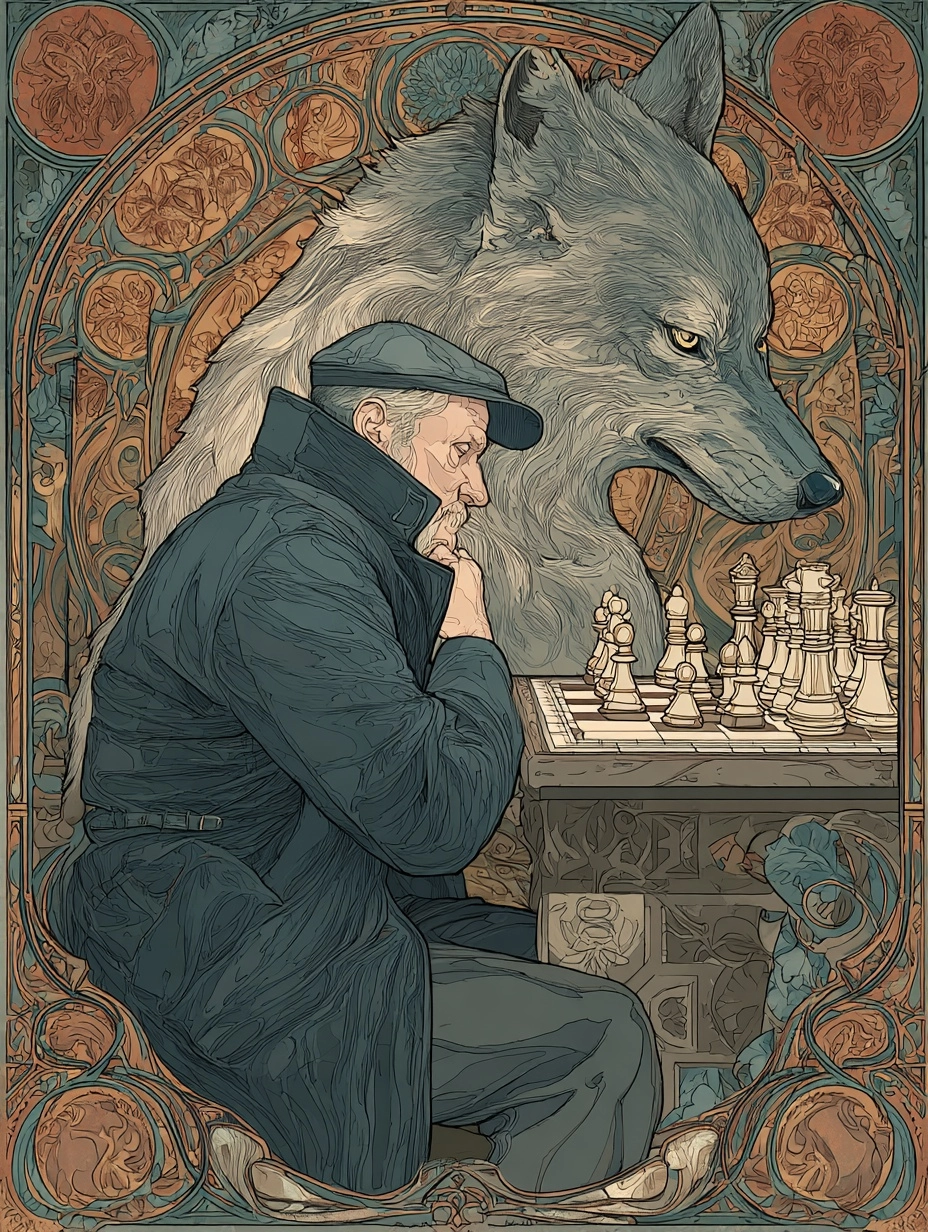
Without --sref 764
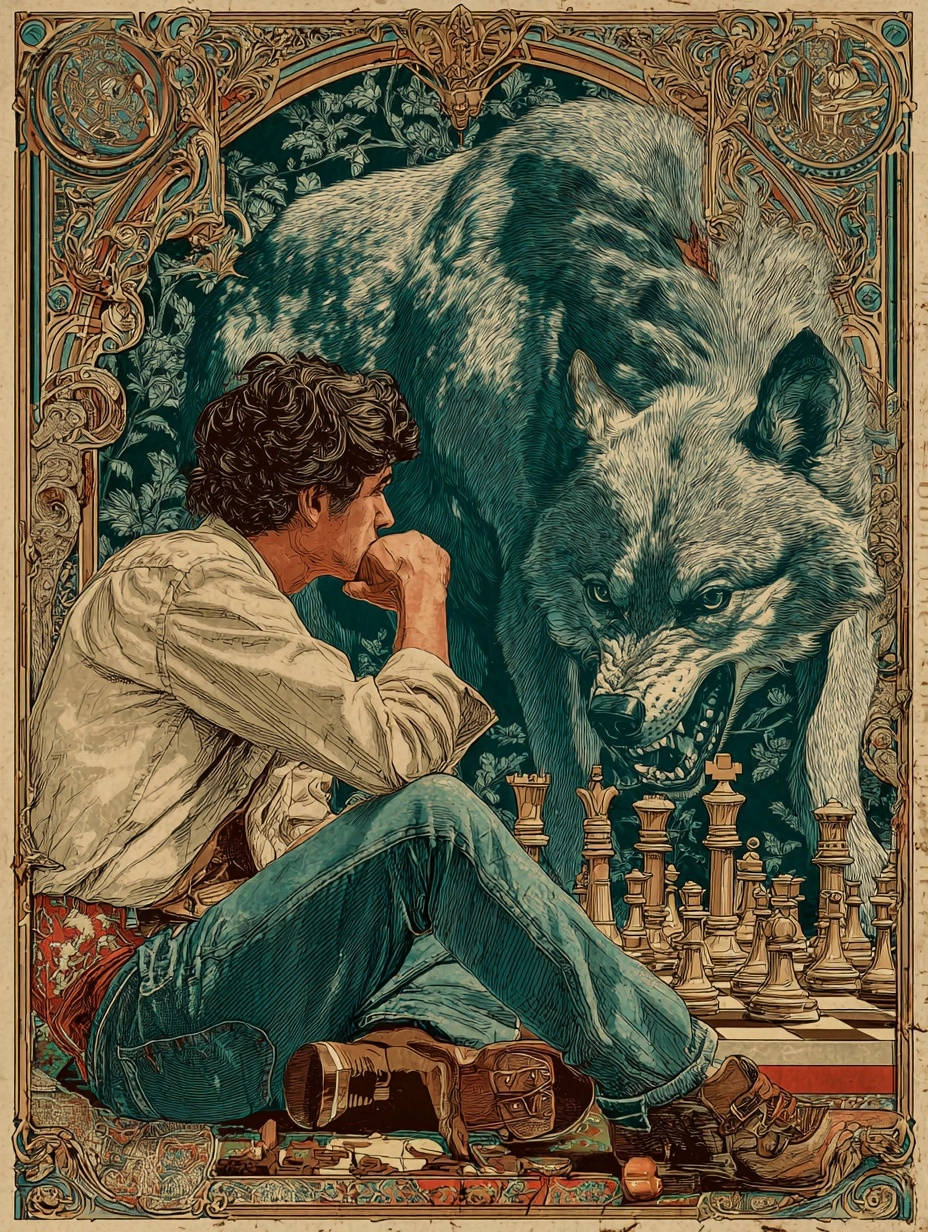
--sref 764 applied
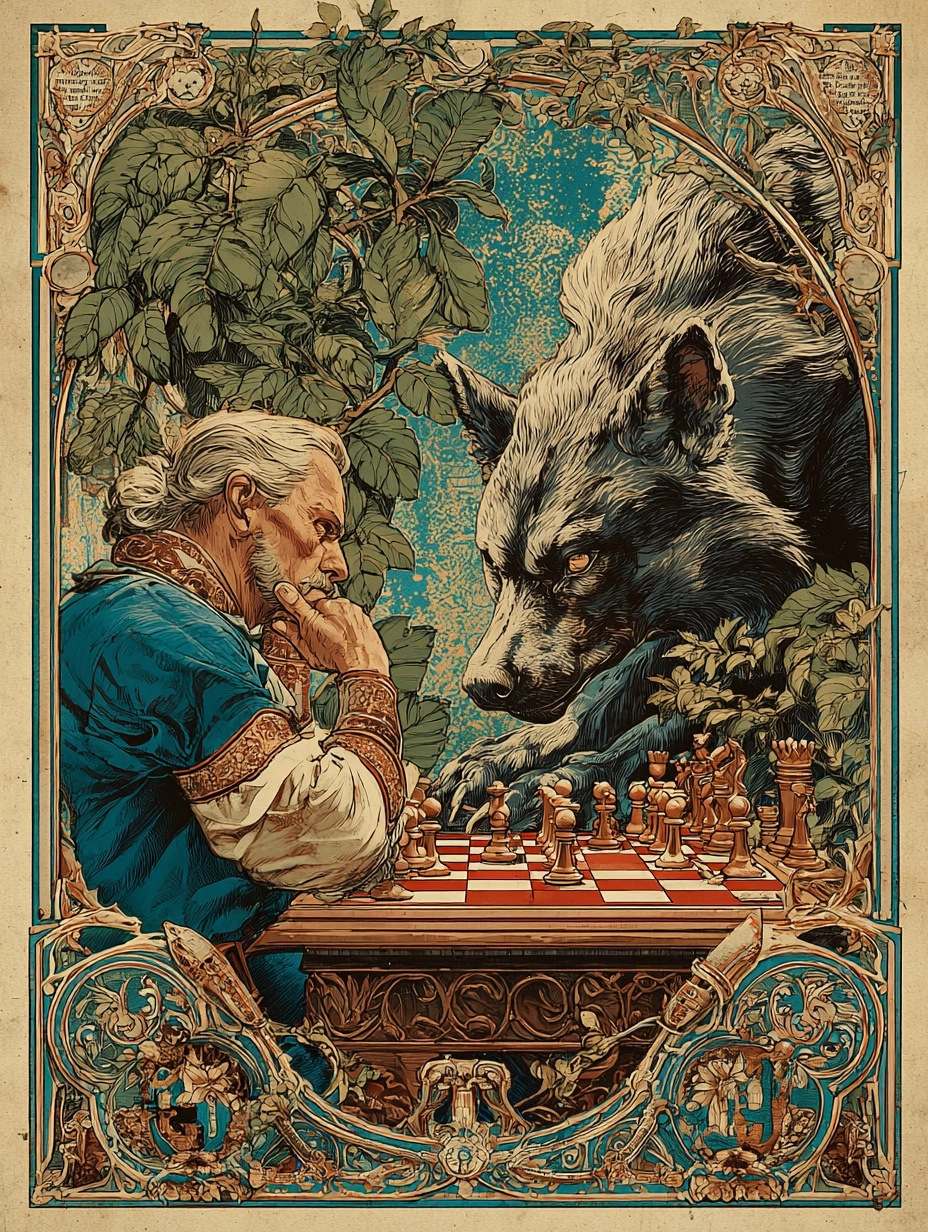
--sref 764 applied
What changed: This is the use case where SREF 764 performs best. The scene survives — the chess player, the wolf, the tension — but it is now surrounded by an ornamental border of foliage and decorative motifs. The composition reads like a full-page illustration from a 19th-century folklore anthology. The subject and the frame cooperate rather than compete. This is the sweet spot of this SREF: narrative scenes with strong characters, where the decorative system adds mythological weight.
Prompt 3 · Interior / Environment
When a Workshop Becomes a Plate
A realistic interior prompt — a photorealistic artisan's workshop. SREF 764 replaces the medium entirely, but unlike the portrait case, the space survives the transformation in full.
an alchemist's workshop interior, stained glass window, vintage tools, warm golden light — tested without / with --sref 764 --ar 3:4
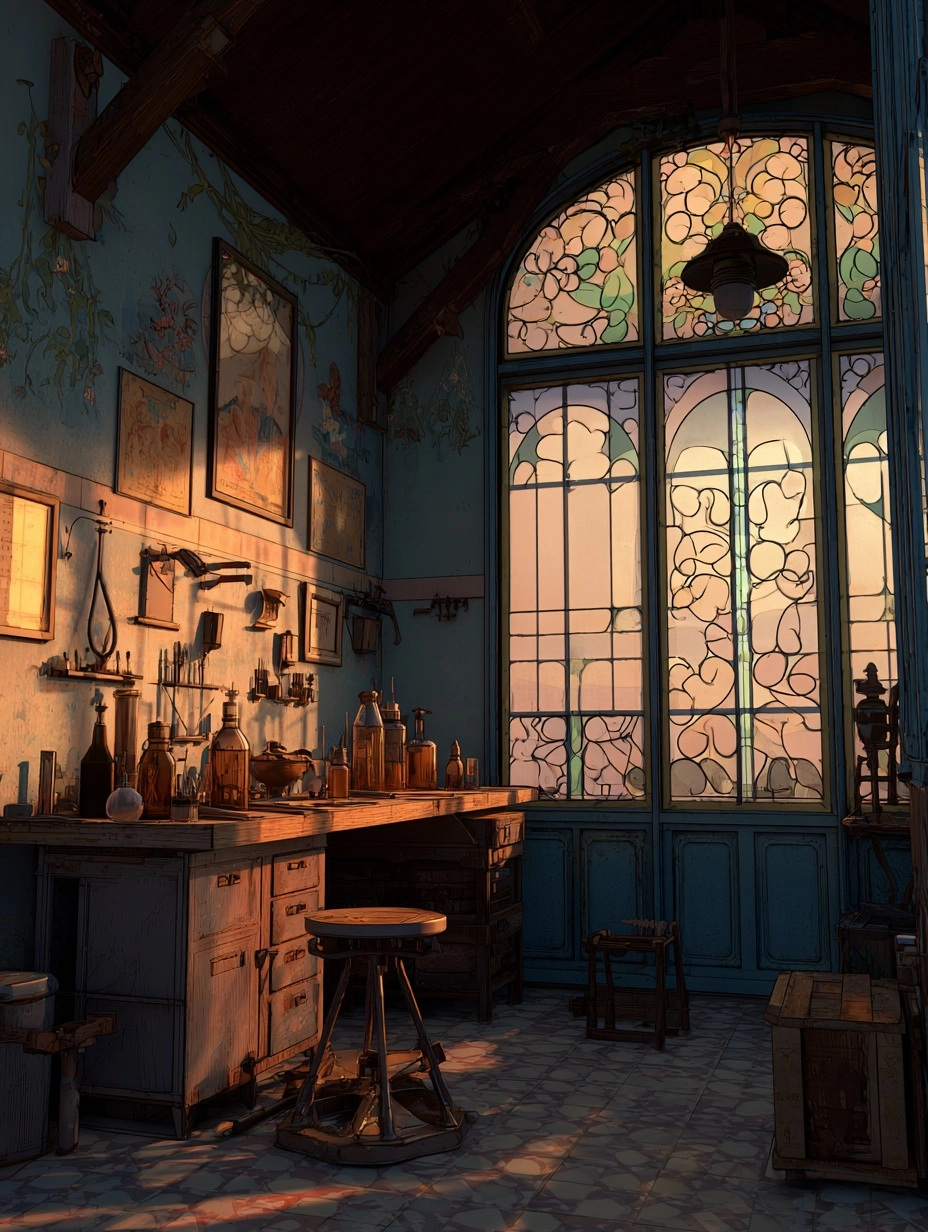
Without --sref 764
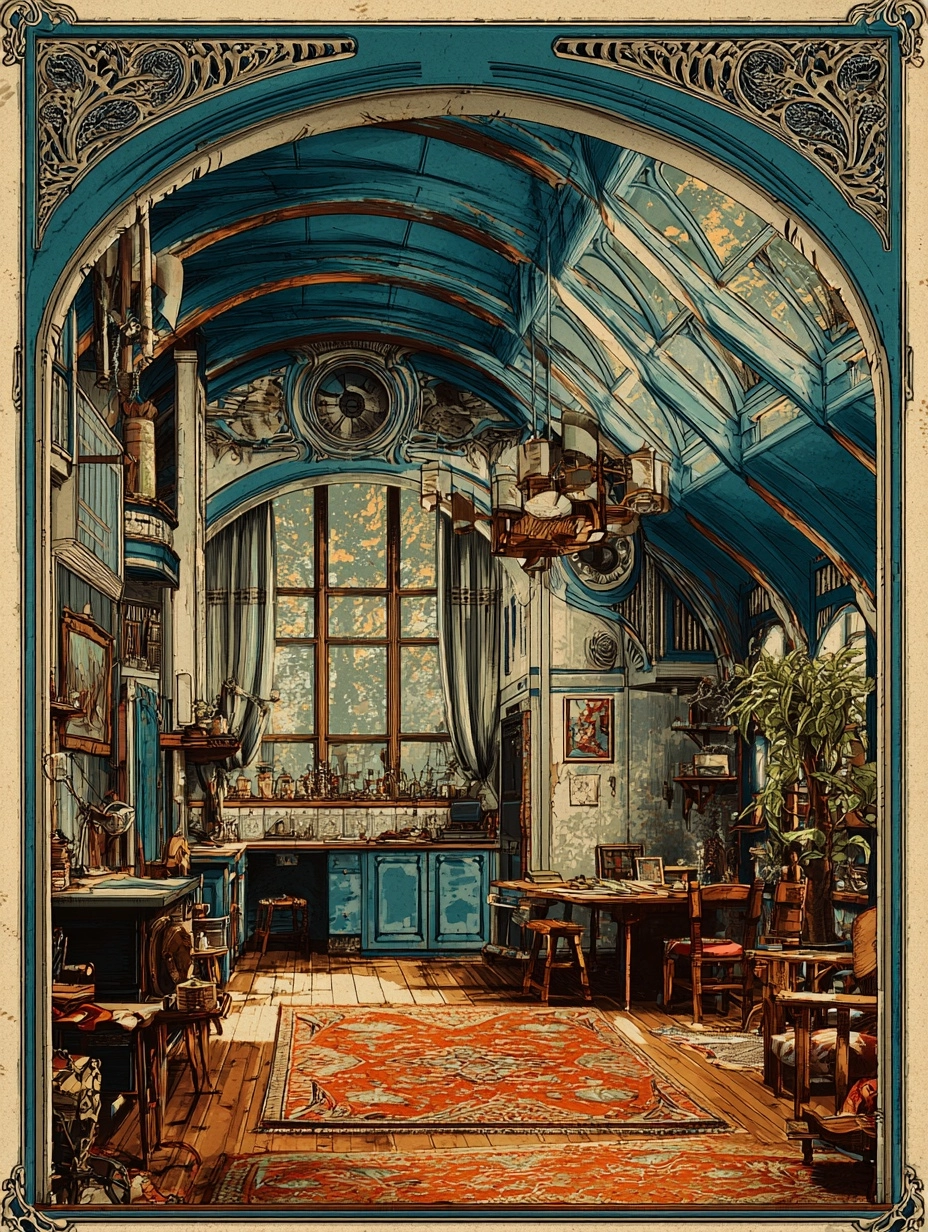
--sref 764 applied
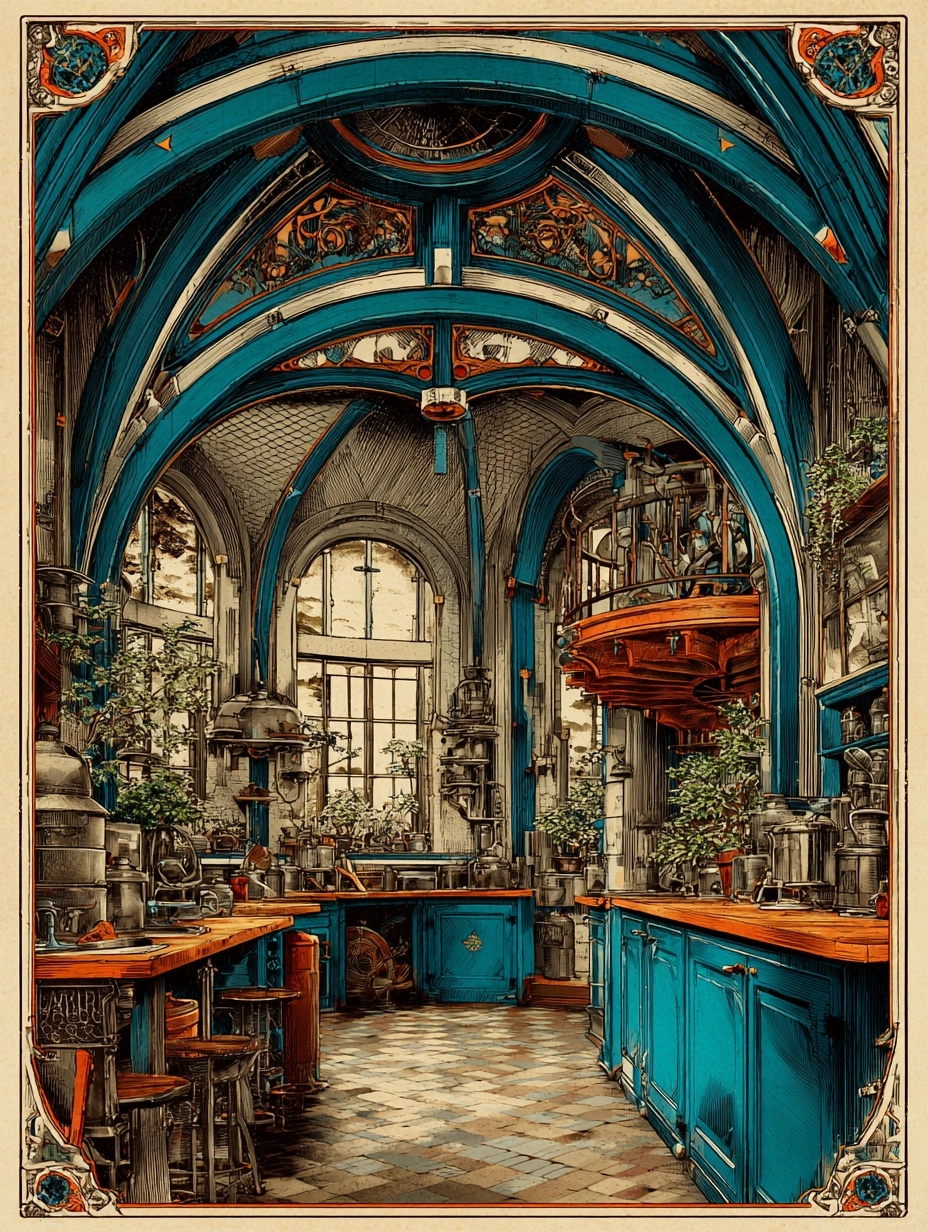
--sref 764 applied
What changed: The photorealistic 3D rendering was replaced by flat vintage illustration. But here the transformation is additive rather than substitutive — the workshop became grander. Gothic arches in teal appeared overhead. The space gained architectural ornament it never had. The stained glass survived, now embedded in an illustrated frame. For interior and environment prompts, SREF 764 is less about replacing content and more about re-publishing it in a more authoritative visual register.
Analysis
A Tale of Two Override Styles
SREF 764 follows a consistent but context-sensitive logic. For portrait subjects, it may absorb the human element entirely, replacing the person with cartographic or ornamental stand-ins. For narrative scenes, it cooperates — wrapping the action in a mythological frame that amplifies it. For environments, it elevates — adding architectural ornament and converting the medium from realistic to illustrated.
This variability is worth understanding before you deploy it. If your prompt is character-focused, consider using a stronger subject description or accepting that the character may become part of a decorative composition rather than its undisputed centre.
SREF 764 logic
The Cabinet
Contracts the world into a decorative frame. Subjects become specimens. Everything is displayed, catalogued, archived in a visual system.
SREF 3230 logic
The Cathedral
Expands space into architecture. Subjects shrink into the environment. The world grows around the prompt until it dominates it.
Where SREF 3230 builds outward, SREF 764 builds inward. Both are dominant codes with a strong visual identity — but they dominate in opposite directions.
Use Cases
Where SREF 764 Works and Where It Falters
Strong Use Cases
- Book and album covers — historical, fantasy, literary fiction
- Narrative scene illustration — mythology, folklore, adventure
- Editorial illustration — cultural and arts publications
- Vintage-aesthetic branding — travel, artisanal, heritage products
- Game concept art with historical or fantastical setting
- Map and atlas illustration, decorative print design
Less Effective Uses
- Tight portrait work — face loses focus to ornamental system
- Photorealistic rendering — medium will be replaced
- Minimalist or contemporary design aesthetics
- Character sheets requiring clean, readable anatomy
- Product photography — objects gain ornamental context
Frequently Asked Questions
What does SREF 764 do to a Midjourney prompt?
SREF 764 wraps any prompt in an ornamental Victorian frame. It introduces decorative borders, gothic arches, and vintage engraving linework — transforming the result into something that looks like an illustrated plate from a 19th-century explorer's atlas or encyclopedia.
What is the visual signature of SREF 764?
Four key markers: ornamental borders and arched frames that enclose the composition; flat vintage illustration style replacing 3D or photographic rendering; a teal-turquoise plus earth-ochre palette; and decorative foliage, cartographic elements, and Victorian ornamental motifs woven into every scene.
Is SREF 764 good for portrait work?
With conditions. SREF 764 sometimes replaces portrait subjects with cartographic or ornamental stand-ins — especially when the prompt leans on objects (maps, globes, instruments) rather than the person. For a reliable portrait result, make the human subject explicitly dominant in your text prompt and consider lowering --sw to reduce the override.
What is SREF 764 best used for?
Book and album covers, editorial illustration, vintage-aesthetic branding, narrative scene illustration, game concept art with a historical flavour, and any project that benefits from the visual authority of a Victorian print or manuscript illumination.
How do I use SREF 764 in Midjourney?
Add --sref 764 at the end of your prompt. Example: a chess grandmaster playing against a wolf, tense atmosphere --sref 764 --ar 3:4. Reduce --sw below 100 if you want the ornamental borders to be less dominant.
Find More SREF Codes Like This
SrefMindForge indexes 3000+ Midjourney style codes by visual category, mood, palette, and geo family. Find the right style for your next project in seconds.
Open SrefMindForge